Scaling Marketing Operations Across 300+ Agents at Local Real Estate Company

Photo by Luke Southern on Unsplash
The Situation
When I joined Better Homes and Gardens Real Estate Kansas City Homes, the marketing team supported a large network of real estate agents operating across multiple offices (as well as marketing for the company as a whole).
Agents frequently needed marketing support, but there was no centralized system for managing incoming requests or tracking project progress. Requests came in through emails, phone calls, texts, and in-person conversations, making it difficult to maintain visibility and ensure timely delivery.
At the same time, platform infrastructure was fragmented. Office-level Facebook pages were inconsistently owned, and the primary advertising account was not properly connected across locations.
As demand increased, the absence of structured systems created operational inefficiencies and risked delays in marketing delivery.
The problem was not just volume; it was fragmentation.
The Challenge
Supporting 300+ agents required more than marketing execution; it required centralized systems capable of handling high request volume.
Key challenges included:
Managing approximately 30+ marketing requests per week
Tracking requests across multiple communication channels
Routing tasks to the correct team members
Maintaining consistent (and realistic) delivery timelines
Rebuilding disconnected Meta account infrastructure
Supporting agents with varying levels of technical knowledge
Without centralized workflows, projects risked delays, duplication, or being overlooked entirely.
The Strategy
To support a distributed network of agents, I focused on creating structured systems that centralized communication, streamlined workflows, and restored platform functionality.
Rather than solving issues individually, I built systems that prevented issues from recurring.
1. Built Centralized Ticketing Infrastructure (Zendesk)
Designed and implemented a ticketing workflow using Zendesk, allowing agents to submit requests through a centralized system.
This transformed communication from scattered requests into trackable workflows.
Responsibilities included:
Building ticket categories and routing logic
Standardizing intake processes
Monitoring incoming requests
Ensuring accurate task assignment
Although agents were encouraged to use Zendesk, requests often still arrived through alternative channels. I tracked and documented these manually to ensure all tasks were captured and completed.
2. Implemented Project Management System (Monday.com)
To support long-term visibility and project tracking, I built and maintained a structured project management workflow in Monday.com.
This allowed the marketing team to:
Track project progress
Assign responsibilities
Monitor timelines
Improve communication between team members
While multiple team members contributed to the system over time, I played a primary role in building, optimizing, and managing its functionality.
3. Restored Meta Infrastructure Across Offices
When I joined, office-level Facebook pages had inconsistent ownership, and the advertising account structure was fragmented.
To resolve this, I:
Completed required documentation to transfer ownership
Coordinated directly with Meta support
Reconnected office pages to the primary account
Standardized account access across locations
This restored operational functionality and enabled consistent content distribution and advertising capabilities across offices.
4. Supported Social Strategy & Training
Worked alongside the marketing team to support agent education through regular training sessions.
Training occurred:
Monthly
As-needed for individual agents
Topics included:
Social media strategy
Platform best practices
Content planning
Video and digital marketing tools
AI and workflow tools
Canva
These sessions helped agents improve confidence and maintain consistent branding across platforms.
5. Supported Standardization Through Templates & Strategy
While design teams developed branded templates, I supported their implementation by helping agents understand how to use templates within broader social strategies.
This improved:
Content consistency
Brand alignment
Posting confidence
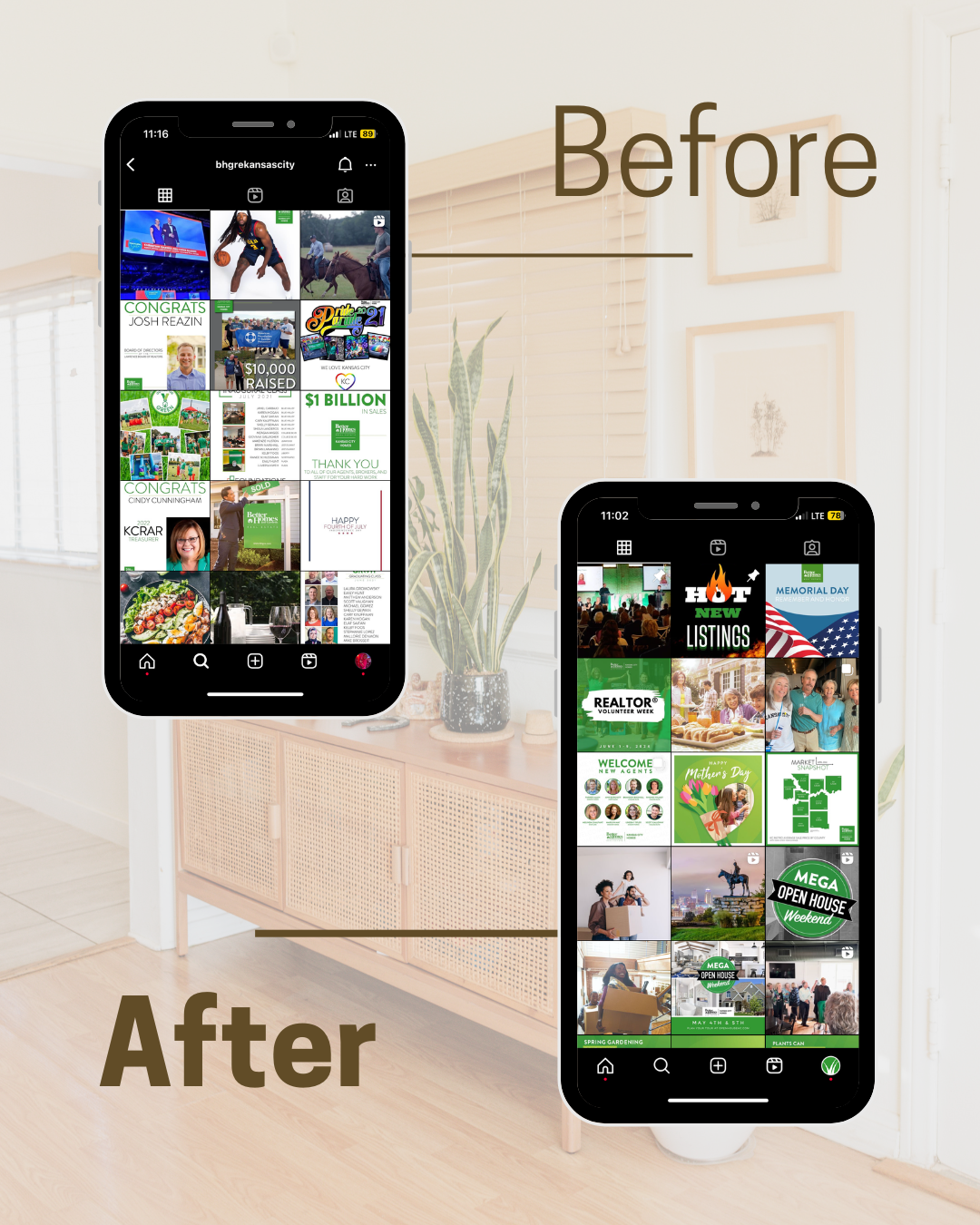
Before and After BHG Kansas City Homes profile feed screenshots.
The Results
By implementing centralized workflows and restoring platform functionality, marketing operations became significantly more efficient and scalable.
Key outcomes included:
Managed approximately 30+ marketing requests per week
Built and maintained Zendesk and Monday.com systems from the ground up
Restored and standardized Meta account ownership across offices
Reduced communication friction through centralized workflows
Improved project visibility and delivery consistency
Supported marketing operations across 300+ agents
Marketing operations shifted from fragmented and reactive to structured and scalable.
The Real Impact
This project reshaped how I think about marketing at scale.
Supporting hundreds of agents required more than creative work; it required operational clarity.
By building centralized systems, restoring infrastructure, and creating repeatable workflows, I helped transform fragmented communication into organized execution.
This wasn’t just about managing marketing.
It was about making marketing sustainable at scale.
Creating structure where scale demands it.