Marketing Mistakes That Cost KC During the World Cup
The headlines started almost immediately after the World Cup came to Kansas City:
“Small businesses say the World Cup isn’t bringing the sales they expected”
I don’t think that’s the World Cup’s fault. And I don’t think it’s the tourists’ fault either.
I’ve spent basically my entire life in Kansas City, Missouri. I love it here. And local businesses are the foundation of our community, and I love to support them whenever and however I can.
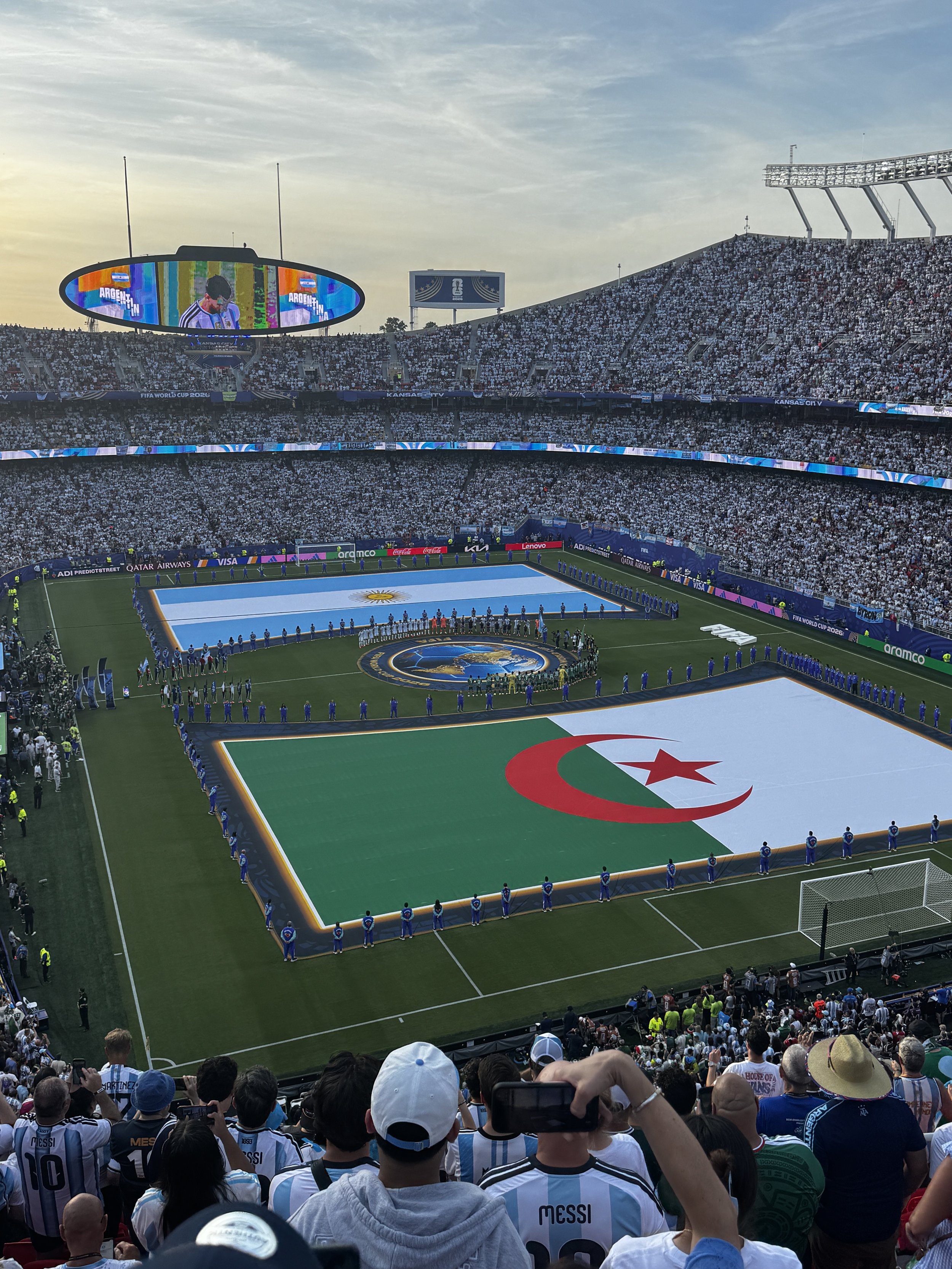
I have also spent the last month attending the World Cup games at Kansas City Stadium and continuing to immerse myself in our KC culture. So I am not speaking hypothetically when I tell you that these small businesses really fumbled the ball when it came to the World Cup. And it truly pains me to say that, but it is what it is — the truth.
Here’s what went wrong…
We expected tourists to act like locals.
Local businesses just assumed that since people would be visiting Kansas City (and possibly for extended periods of time), that they would be able to drive across town to visit their business, know the neighborhoods, search for their specific stores, and/or spend hours shopping or taking in local cuisine.
Instead, visitors (international or not) generally:
Stayed near stadiums, Fan Fest, or the airport
Walked everywhere from their hotel (aside from the game(s))
Used only public transit (i.e., all the buses that FIFA organized)
Visited attractions/stores/restaurants that were all clustered together (Think: The Plaza, Power & Light, Crown Center)
Followed only recommendations that were given to them by the people they spoke to
Had extremely limited time and preferred to spend it doing Futbol-related activities (duh)
If your business required someone to know Kansas City…
… you already lost.
And if your business isn’t even a local Kansas City favorite…
… you also lost.
Accessibility matters more than most people realize
If your business is located north of the river and you were expecting tourists to flock to your business, I’m so sorry, but what were you thinking? I know there was a bus route in place from a few select locations north of the river, but from my experience, it was mostly being used by locals getting down to Fan Fest or the stadium.
Most people who came to stay for the game, stayed in these locations (which I gathered from talking to people while I was out, and while I was at each of the games):
The Plaza
Downtown near P&L
Close to the airport
Close to the stadium
Close to Fan Fest
People who do not know KC and our neighborhoods and suburbs, were not thinking about your business that lives north of the river. And that drive may not be far to you and me, but it might be far and not worth the price of an Uber to someone who is not from here.
As Americans, we underestimate how unusual our transportation is. Someone from, say, Europe, is not thinking, “let’s Uber for 25 minutes to buy a houseplant.”
A lot of businesses here in Kansas City are destination businesses. People intentionally drive there because they already know about them and love them.
World Cup visitors were not destination shoppers, they were discovery shoppers. That means they wandered and followed crowds. They searched for “coffee near me” and they looked for whatever was easiest for them in that moment.
Those are two completely different customer journeys.
You were marketing to the wrong customer
Many businesses continued business as usual, except for maybe a themed social post or a few soccer decorations at their storefront.
When instead, they could have been making content targeted at tourists, like:
“Five minute walk from the x Streetcar stop”
“World Cup specials” (this one I did see more frequently; and it’s also not lost on me the limitations of using World Cup in advertising, but we can get creative, come on)
Multilingual signage
Maps
“Here’s what to order”
“Open late after matches”
Altering menus based on which countries were in town
Guys, marketing is not just social media. I KNOW small businesses have limited resources, but I promise you, investing in other avenues is well worth it in the end, even if the amount you’re investing is small or only a time-based investment (teach yourself about email marketing or something, IDK).
Reduce the friction between your business and your customers. Make everything easy for them. Don’t leave them guessing what you do, who you are, what you sell, what you stand for, etc.
Not every business was a good fit for World Cup visitors
This was the most surprising thing for me. And quite frankly, the most annoying. Because, come on, let’s have a little bit of common sense, please.
Perhaps there were some, but most tourists are not great candidates for
House plants. This one blew my mind the most. How is anyone going to get a plant back to Argentina? First of all, a nightmare packing. Second, customs!
Boutiques. Unless perhaps you’re selling unique gear to wear for matches
Books. Books are heavy. And let’s not forget that if you only sell English books and a lot of tourists do not speak great English or it’s not their preferred language to read in…
Specialty home decor. I’m done elaborating, I hope you get the point.
So again, I ask you:
Would you buy a 20-pound plant while traveling internationally?
Probably not.
Would you buy a novel written only in English when your primary language is Dutch?
Probably not.
And none of these things mean your business is bad by the way. Not at all. That’s not the point I’m trying to make.
It means you were trying to target the wrong customer and were upset when they didn’t come through for you.
There were so many opportunities hiding in plain sight
There are so many things that local businesses could have capitalized on to make these people your target customer for the month, to get them interested, to tie in the fanfare of it all. Here are some examples; please steal them for future use.
Restaurants:
International menus (even if it’s just a tasting menu)
Match-day specials
Coffee shops:
Fan passports
Collectible cups (these are much easier to take home, and even if they don’t, they can be reused for the duration of a trip; maybe offer a discount on the next drink if someone grabs one)
Bookstores:
Local history
Soccer books
Translated titles
In-shop events
Retail:
Advertise as locally made souvenirs (people are much more likely to pick these up as a unique souvenir)
Luggage-friendly products
Museums:
Bilingual guides
Breweries:
Country-themed events
Everyone:
Collaborate with nearby businesses
And if your businesses are far from where the tourists are… GO TO THEM! Have a pop-up with some other local businesses. Host an event somewhere. You have options!
The businesses that did win, understood one thing
People do not buy products. People want to solve their problems.
Tourists wanted:
Yummy food
Convenience
Memorable experiences
Recommendations
Things that fit in their luggage
Places they could actually get to
And the businesses that won, did most (if not all) of the above.
I want you to win next time, so please revisit those bullet points the next time a major event comes to Kansas City!
The bigger lesson
Let’s zoom out.
The World Cup was never just about six soccer matches to Kansas City.
That’s obvious to all of us now.
It was a massive user experience test.
Our city was competing for visitors. And our businesses were competing for attention.
Good marketing asks: who is my customer today?
Not: who do I wish my customer was?
Listen, I know it’s easy for me to sit behind a keyboard after the fact and point out what could have been done differently. Running a small business is incredibly difficult, and hindsight is always clearer than planning six months in advance.
But if we’re going to treat the World Cup as a learning opportunity — and we should — then we have to be willing to ask harder questions than “why didn’t tourists spend more money?”
The better question is: “Did we make it easy for them to?”
I know there will be more opportunities like this one for Kansas City. We are BOOMING! I can’t wait to see what comes next.